My Top 10 Posts of 2021

And we thought 2020 was a doozy! And yes it was, but 2021 threw us our fair share of challenges. And I think it’s fair to say that most of those challenges, if not all, can be traced to COVID and its ongoing effects. For me, the biggest challenge of all has been student apathy… just a lack of curiosity, a lack of drive, a lack of motivation on the part of many (most?) students.

That being said, student apathy does, ironically, motivate me to be more curious, to delve into new approaches, open up new literature, try new apps, or just lean harder into the tried-and-true.

For that reason, I’m really glad I have been adding to my blog on a near weekly basis since summer 2017.

Marilyn Yung
Good ol’ school pictures! Here I am in early September 2021.

This blog keeps me grounded, organized, reflective, and grateful for what I do. And THANK YOU for responding and reading regularly. That, my friends, makes it all worthwhile. Your views, visits, comments, feedback, and downloads keep me here, so I’ll say it again: THANK YOU!

I’ve compiled this post to put into one place my most-read posts of 2021. I hope you find these helpful, and I really hope you’ll skim through these titles and make sure you haven’t missed any that will help you be a more effective and confident teacher in 2022. Thanks again!

Without further ado, here are my top ten posts of 2021!

book bento

1. Book Bentos: My First Attempt

To conclude first quarter, my independent reading class usually produces some kind of summative project for a book they read during the previous eight weeks. This fall, instead of the usual book report, I came across the “book bento” idea in a private Facebook group. It basically takes the look of a bento, a common Japanese to-go meal, and applies it to a book. Instead of an arrangement of individual food portions, it’s an arrangement comprised of a book surrounded by tangible objects that connect to the book.

Find this Instagram account, @bookbento for lots of examples from…

2. Where I’m From Poems

George Ella Lyons

“Where I’m From” poems are perfect for going back to school! Read on to get acquainted with this awesome poem that every teacher I know raves about.

Have you heard of George Ella Lyon? She’s an American writer and teacher from Kentucky who wrote a poem several years ago called “Where I’m From.”

To get started, I read aloud Lyons’ “Where I’m From” poem as a mentor text and then I follow that up with reading three or four poems from former students. Then I pass out a template and…

3. Corona Virus Acrostic Poems

Students wearing Covid masks

My students learned at home from March 17 through May 14, 2020 when the school year officially ended. As part of their distance learning back then, I asked students to write a couple of paragraphs every other day or so for a “Life in the Time of Corona” journal. This journal documented their personal experience during the global pandemic.

I got the idea for students to create these journals thanks to a tweet from Kelly Gallagher in March of 2020, just when things were really starting to slide downhill pandemic-wise. Here’s the assignment sheet I created…

4. Canterbury Tales Resources
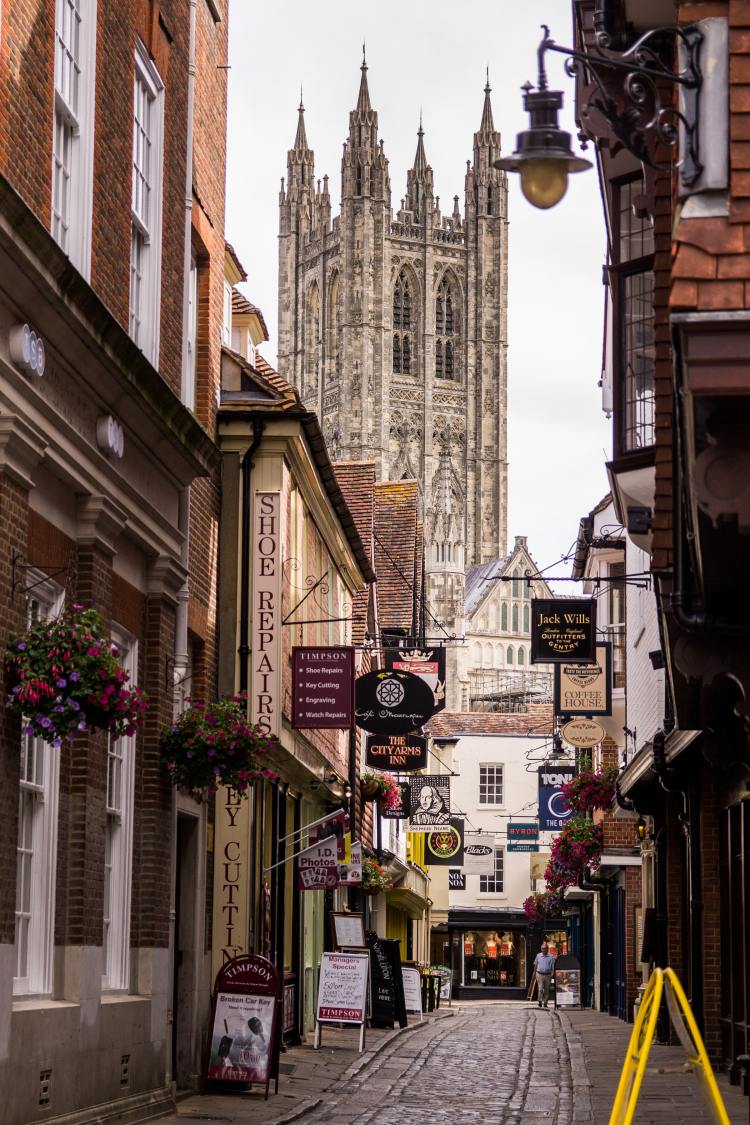
Canterbury Cathedral

On Friday last week, as we transitioned from a study of The Canterbury Tales to Le Morte d’Arthur, it occurred to me that it might be worthwhile to share with you the resources I used and/or created to teach the tales. Here are six of them presented in the order that they fit into my lesson plans…

5. Pros and Cons of Padlet

Students working on a laptop

Yesterday, I wrote about six assignments I am using to test-drive the discussion board app called Padlet. Click here for a link to that post. Read on for my first impressions in the form of pros and cons.

While I’m using it now for distance learning during my school’s COVID-19 closing, I really think it will have more optimal use in the classroom.

6. Exploding a Moment with Barry Lane

Fireworks
Photo by Francis Seura on Pexels.com

This year, we wrote out an exploded moment instead of just watching one be narrated in a video. Last Tuesday, I planned an activity for my seventh- and eighth-grade classes that worked so well, I knew I had to share. We exploded a baseball moment.

“Exploding a moment “ is what writing teacher Barry Lane calls it when…

7. Teaching Transitions in Writing, Part 1, updated June 2021

Chasing Lincoln's Killer by James Swanson

Don’t teach just transition words… teach transition ideas as well.

Note added on June 5, 2021: I often go back to my previous blog posts and see the details of how I taught a certain book or writing mini-lesson. In fact, I recently did that with this post. In April, I was working with my junior English classes and I used the photos from Chasing Lincoln’s Killer as examples of ways to connect the six essays they had compiled for their “Transcendentalism and the American Identity” essays. Having this blog post handy helped them see actual examples from the “real world” of ways to connect their essays into a cohesive whole. This is another way to show students that their sentences, paragraphs, and even sections of an essay should “hold hands” for better flow and clarity, as the text They Say, I Say suggests. And now back to our regularly scheduled programming. 

I taught this book for eight years in my middle school ELA classes. It’s such a ride! Plus, when you read it as a writer,…

8. My First Attempt at Teaching The Red Badge of Courage

The Red Badge of Courage by Stephen Crane

My resources, my reservations, and my main reason to teach this book again

Right now, at my new teaching position at a rural high school in Missouri, one of my junior/senior level electives classes is reading The Red Badge of Courage by Stephen Crane. If you’re unfamiliar with The Red Badge of Courage, it’s a Civil War novel first published in 1895 that explores the effects of war on a young man named Henry Fleming.

According to this Glencoe Literature Library Study Guide, “The Red Badge of Courage is a profile of an inexperienced young soldier undergoing his first experience of battle. ‘The youth’ in the novel, Henry Fleming, makes a journey of self-discovery…

9. Use This Movie to Teach High School Writers How to Explode a Moment

The Natural starring Robert Redford

For some reason, young writers seem to want to write as little as possible when describing a scene. They’re too busy. Too distracted. Or they think the reader will be able to read their minds. Whatever. I often read descriptions from students as sparse as this example: I shot the ball and it went in and everybody freaked out.

However, when kids see the effectiveness of exploding a moment… making it come alive with slow-motion action, they’ll surprise themselves with how much description they can…

10. This Back-to-School One-Pager Works Wonders

Back-to-School One-Pager

Get to know your in-class and remote learners quickly. Thanks to Spark Creativity! for this awesome “biographical one-pager” idea that I used last week when school started on Thursday. Read this blog post for all the details and printable downloads.

As a mentor or example, I projected mine (see above) on the whiteboard and we talked about the details I chose to share…


Marilyn Yung

Thanks for checking in! Please feel free to leave a comment below or on my Contact Page. I’m always interested in what you’re doing in your classroom to motivate and challenge your students.

In addition, stay tuned for more poetry posts! I have THOROUGHLY ENJOYED my new poetry class this year and I have so many ideas, prompts, and contest information to share with you. Become a follower, sign up for emails below (and I’ll send you a Treasured Object Poem handout in return!), or bookmark my site to catch those posts! Have a great third quarter!


Need a new poetry lesson?

Enter your email below and I’ll send you this PDF file that will teach your students to write Treasured Object Poems, one of my favorite poem activities. I know your students will enjoy it!

Image shows readers the paper I'll send for signing up for my email list. The handout gives instructions for a Treasured Object poem.
Treasured Object Poems

Processing…
Success! You're on the list.

Need something else?

Love teaching. Make it memorable. | ELA Brave and True

Featured image: Photo by Seema Miah on Unsplash

Sketchnotes: The Great Gatsby & Rhapsody in Blue

Explore music with sketchnotes

On the last day of class before Christmas break, I decided to do something totally off the “read-and-discuss track” that my class had been on since starting our unit on F. Scott Fitzgerald’s The Great Gatsby.

I decided to have students experience composer George Gershwin’s jazz masterpiece Rhapsody in Blue via Betsy Potash’s sketchnotes. (Go to Spark Creativity for free templates and more).

The ground-breaking musical piece is considered to be the inspiration behind the only fictional music mentioned in the entire novel, the imaginary Vladimir Tostov’s “Jazz History of the World.” According to Gatsby’s orchestra leader, the Tostov’s piece “attracted so much attention at Carnegie Hall last May.” He continues, “If you read the papers you know there was a big sensation.”

This is the Leonard Berstein version I played for my class using my Spotify account. I did not have them watch this, but this is the same performance.

This particular description causes many to believe that Rhapsody in Blue was the piece Fitzgerald was really referencing. When Gershwin debuted his jazz masterpiece in 1924 with Paul Whiteman’s Orchestra, Whiteman wanted the music to legitimize jazz and center the new American artform on the world stage. Both goals were accomplished with the music that has since become Gershwin’s most well-known masterpiece.


And now, we interrupt this post for the Common Core…

Standards alignment: RL.11-12.9

When students analyze a piece of music, I consider that music to be a kind of text, in the cross-curricular sense. Making sketchnotes of an iconic musical piece referenced in a novel accomplishes the following Common Core standard:

CCSS.ELA-LITERACY.RL.11-12.9
“Demonstrate knowledge of eighteenth-, nineteenth- and early-twentieth-century foundational works of American literature, including how two or more texts from the same period treat similar themes or topics.” When making sketchnotes, students are synthesizing ideas from that musical text as it relates to the novel from which the music is derived.


Besides meeting that standard, I wanted my students to experience Rhapsody in Blue because I know they will hear it in commercials, movies, and in other pop culture references from time to time. It’s one of those signature American compositions that students need to add to their “American cultural literacy” accounts.

The Great Gatsby 2013 movie
Baz Luhrman’s The Great Gatsby

And if you show Baz Luhrman’s 2013 The Great Gatsby film in class, you’ll notice that Rhapsody in Blue is the music that accompanies the big reveal of Gatsby to Nick at the glittering party in chapter 3. Rhapsody makes other appearances during the movie, including the ride into town that Gatsby and Nick take to meet Mayer Wolfsheim.

“The city seen from the Queensboro Bridge is always the city seen for the first time, in its first wild promise of all the mystery and the beauty in the world.

The Great Gatsby, Ch. 4

As Nick ponders these thoughts, the score soars in the background building to a crescendo to reflect the optimism, opportunity, and decadence that the city represented during the Jazz Age.

So here’s what I did:

  • I passed out plain 11″ by 17″ inch paper to each student.
  • I asked students to draw sketchnotes in blue as they listened to the music.
  • I suggested that they listen for a minute or two before starting since that might help images come to mind.
  • After seeing a few blank stares at this apparently crazy idea, I gave them some ideas: draw a cityscape, spirals, zigzags… anything that might evolve as they listened.
  • I required students to include these three things on their page: 1) George Gershwin, 2) Rhapsody in Blue, and 3) 1924
  • I also let them know that the song would last for sixteen minutes. There would be plenty of time to come up with ideas!

This activity was the perfect “last-day-before-Christmas-break” activity. Here are some photos of what my students came up with:

student sketchnotes
student sketchnotes
student sketchnotes

I also made this “quick and dirty” handout that I read aloud from before starting the music. I wanted them to have some context beyond that from the novel.

Making sketchnotes from music may work for any number of novels that have musical allusions. Think of a novel that you pair with its movie version. Are there any songs that have special cultural meaning that your students should experience?

I’m also wondering if there are ways to make this activity more than just a visual exposure to a musical piece. Can I have students do more than just listen and draw? Can I have them use their drawing as a springboard for a written piece about the music that utilizes text excerpts or citations?

Marilyn Yung, owner of ELA Brave and True

There’s always more to think about, right?!

I hope your Christmas break was restful and that you’ll have a manageable January, despite the COVID surge sweeping the country.

Need ideas for a novel you’re teaching? Trying something new in your classroom? I’d love to hear what you’re up to. Feel free to leave a comment below or on my Contact page.


Need a new poetry idea?

Enter your email below and I’ll send you this PDF file that will teach your students to write Treasured Object Poems, one of my favorite poem activities. I know your students will enjoy it!

Image shows readers the paper I'll send for signing up for my email list. The handout gives instructions for a Treasured Object poem.
Treasured Object Poems

Processing…
Success! You're on the list.

Need something else?


Book Bento Tip: The Art of Knolling

Use these knolling videos for better book bentos

I learned a new word today. It’s “knolling.” I saw this word in a book called Things Come Apart: A Teardown Manual for Modern Living by Todd McLellan at my local Barnes and Noble. As I browsed the photography books for a gift for my son, I was drawn to the compelling cover of McLellan’s book. When I read the book jacket it spoke of “knolling.”

Here’s how the UK gadget and tech review website, Pocket-lint, defines knolling:

Knolling is a wonderfully satisfying photography technique that involves lining things up to create the perfect image.

This style of photography involves arranging similar objects in a parallel manner or at 90-degrees in an organised way.

The result is often incredibly satisfying and somewhat beautiful. It’s become quite a trend in recent years,… 

29 Satisfying Images of Knolled Tech and Everyday Objects | Adrian Willings

Here’s another definition from this video from artist Tom Sachs:

Knolling: verb; 1989; to arrange like objects in parallel or 90 degree angles as a method of organization.

Don’t you love learning new words?!

Who knew?! I mean, really, I didn’t know there was a word for how I instruct students to design their book bentos. I’ve always just asked students to “lay out their objects in straight lines and/or at ninety degree angles.” I had no idea there was a word for it.

You can google “knolling” and find a plethora of images and design websites with loads more information on this trend that seems to owe at least part of its popularity to Instagram and other digital and social media, where it’s often seen.

But where did the word come from?

According to the video linked below from Alt Media Studios in Chagrin Falls, Ohio, the word “knoll” was coined around 1987 by a photographer named Andrew Kromelow, who was a janitor at a furniture stored owned by renowned architect Frank Gehry. Gehry had been designing furniture for a brand called Knoll, which was named for Florence Knoll, who designed very angular furniture pieces.

A Knoll furniture advertisement; Photo: MidCentArc on Flickr; License

At the end of each work day, Kromelow took overhead photos of the various tools and equipment and objects left out. He called this activity knolling. Later, an artist named Tom Sachs, who worked with Gehry, built on the idea and popularized the phrase, “Always be knolling.”

Always be knolling.

Here are three reasons knolling is popular:

  1. Knolling is captivating. A knolled photograph is hard to ignore.
  2. Knolling makes objects stand out in an easily visible way.
  3. Knolling shows similarities, connections, and relationships between the assembled objects.

Check out the videos below to learn more about knolling. In fact, the first video in particular would be perfect for showing kids how to arrange or knoll their book bentos.

This video is provided by Alt Media Studios located in Chagrin Falls, Ohio.

I hope these video resources will help you show students how to make better, more appealing book bentos!

That’s all for this week. When I learned this new word today, I knew I had to share it with you. Words enrich our lives with meaning and can open doors to new curiosities and learning.

Fill your students in on knolling as they work on their book bentos and let them know that they are engaging in a very design-forward photography trend!

As school winds down for the Christmas break, I feel hints of the rest and relaxation that’s right around the corner. Enjoy these final school days of 2021!


Need a new poetry idea?

Enter your email below and I’ll send you this PDF file that will teach your students to write Treasured Object Poems, one of my favorite poem activities. I know your students will enjoy it!

Image shows readers the paper I'll send for signing up for my email list. The handout gives instructions for a Treasured Object poem.
Treasured Object Poems

Processing…
Success! You're on the list.

Need something else?


Love teaching. Make it memorable. | ELA Brave and True

Book bento instructions and tips

These book bento instructions include a mentor bento

Now that the semester is almost over, are you in need of a quick way to alternatively assess student reading? If so, try book bentos!

I’ve made it super easy to give book bentos a try.

I created a Google Slides presentation with basic instructions and tips to help your students create successful bentos.

Included in the four-slide presentation, you will also find a mentor book bento (with object descriptions) that I created for students using The Diary of Anne Frank.

I’ve posted this resource on Teachers Pay Teachers for $2. I hope you find it useful and super easy to use tomorrow or whenever it fits into your plans over the next couple of weeks.

Updated 3/7/2022: Also, I’ve added a very basic book bento rubric as a separate product. Please find it here on TpT.

Books bentos are a process. No surprise there.

I tried book bentos for the first time with my students during fall 2020. It was a little rough, I’ll admit. However, I kept at it, and since then, I can honestly say that the quality of book bentos from each cycle of readers has steadily improved.

What’s more, students seem to enjoy making book bentos. The projects demonstrate student understanding and while bentos may not involve traditional academic writing practice, they definitely do engage students more and encourage them to think “outside the essay box.”

Have you tried book bentos yet? Now might be the time to jump in!

Leave a comment with your book bento experiences. I’d be especially interested in your thoughts on how to make book bentos more rigorous and demonstrative of critical thinking. For example, should key quotes from the text be included in the assignment to further support the chosen objects? Leave a comment below or on my contact page.

Need another poetry idea?

Enter your email below and I’ll send you this PDF file that will teach your students to write Treasured Object Poems, one of my favorite poem activities. I know your students will enjoy it!

Image shows readers the paper I'll send for signing up for my email list. The handout gives instructions for a Treasured Object poem.
Treasured Object Poems

Processing…
Success! You're on the list.

Need something else?


More book bento posts comin’ right up!


Love teaching. Make it memorable. | ELA Brave and True

How I Taught The Jungle in One Week

Devote only one week to The Jungle? It just felt wrong. (updated 8/2022)

With limited time to fit The Jungle, Upton Sinclair’s Progressive Era mainstay, into the first semester, I just didn’t think it would be possible to teach it in one week. I even experienced a healthy dose of teacher-guilt as I considered it, actually.

The Jungle by Upton Sinclair
This is the version of The Jungle I use in my classes. It runs 402 pages!

Questions swirled through my mind as I wondered how to include The Jungle in my two classes of juniors taking American Literature.

Would it be worth it?

Would students make this observation: that literature can impact the world and make it a better place?

I was that hesitant to take this approach.

But in the back of my mind, I also thought… why not? After all, many history and social studies teachers already include it to some extent in their curricula (as is the case at my school). Therefore, to avoid duplication it probably doesn’t make sense to do a full-length unit on the book. In addition, my class set copies run 402 pages in length! In the end, it just didn’t seem practical to devote a large chunk of time to The Jungle this go ’round.

But still… I wanted to include it to some degree, especially as The Jungle is part of our on-going lessons on influential American texts, which also include Uncle Tom’s Cabin, which we studied in October, and Silent Spring, which we will read second semester.

If you’re like me and don’t have a lot of time for The Jungle, think about trying this.

In summer 2022, I added a resource on my site shop to help you teach The Jungle in one week. It culminates with one-chapter one-pager activity.

Here’s a link to “The Jungle in One Week” PowerPoint on Teachers Pay Teachers. This resource provides you with seventeen lecture slides to introduce the novel plus directions for the One-Chapter One-Pager assignment discussed in this post.

Click the image at left to go to the same resource on my site shop.


Puck Magazine cover depicts food safety concerns in 1884
I showed images such as this 1884 cover from Puck, the popular humor magazine, in my Google Slides so kids can see that food safety was a known controversy. | Image: Science History Institute

Here’s how I taught The Jungle in one week:

  1. I provided a short lecture (for lack of a better word) to introduce and discuss the muckraker journalist Upton Sinclair, his goal for his novel (to highlight the harrowing immigrant experience — not food processing nightmares), and general historical context.
    • Yes, my approach is fairly traditional here. I have a Google Slides presentation that I’m building and posting on Google Classroom for students to use and refer to at test time. However, I still require that they take handwritten notes from these slides, as I believe handwriting helps them process and retain the information better.
    • I do indicate which information will be on a test at the end of the quarter.
  2. I provided a general summary of the novel including how it ends and a “family tree” of the characters in the novel. They would need this information for our next task.
  3. I had students choose one chapter to read silently in class.
  4. I assigned a one-pager for their one chapter. I made a highly-detailed and very colorful mentor for them using the book’s final chapter. This example was key.
  5. In fact, I believe it subtly showed them the level of detail I was expecting. The main advice I gave them: fill up the page and make it colorful.
    • Here are the other instructions for that one-pager:
      • Put the chapter number and the book title in the center rectangle.
      • In the four main squares, include the following:
        • Your chapter’s characters
        • The setting of your chapter
        • The main event of your chapter
        • Three important quotes with their page numbers
      • In the border, draw a design or pattern that connects meaningfully to your chapter. Here’s a photo of the example I made for students:
This is a photo of the example one-pager I made for students as a reference for the level of detail I was looking for in their work.

And that was it.

Everyone’s one-pagers are now hanging in the hallway. I’ve included a few below from both boys and girls, including students who excel at art and those who don’t.

My “Jungle one-chapter one-pager” project represents some of the best one-pager work I’ve ever seen from my students.

They really took their time, filled up the template (I use Betsy Potash’s templates; find them here), and used lots of color.

One thing: my students’ one-pagers are larger than those you’ll find on Betsy’s site. I enlarge mine to 145 percent (here’s a post) so students can work “bigger.” It seems to make a better presentation and students take the project more seriously when the project is presented to them on 11″ x 17″ paper instead of 8-1/2″ x 11″.

Enlarge the one-pager template for better results!

Another thing to know: I couldn’t cover every chapter of The Jungle. My largest class of juniors has 24 students in it; the novel has thirty-one chapters. I just dealt with it, choosing to work with chapters one through twenty-four.

Doing this also took the focus off Sinclair’s heavy-handed socialist propaganda in the book’s final chapters. If you have more students, I would go ahead and assign all the chapters, giving more context for Sinclair’s political leanings.

So even though each student read only one chapter of the novel, students learned its pivotal importance in the development of our nation’s food safety laws, worker rights, the immigrant experience in the early 20th century, and, lastly, the influence writers can have on society. Our earlier discussions revealed much about the formation of the 1906 Food and Drugs Act, a.k.a. the Wiley Act, and its later effect on the formation in 1938 of the nation’s first consumer protection agency, the Food and Drug Administration.

Understanding the entire saga of Jurgis and the extended Lithuanian immigrant family wasn’t necessary; reading one episode and viewing other students’ “one chapter one-pagers” provided the rest of the picture.


Marilyn Yung of ELA Brave and True

So there you have it. I freely admit it: I taught The Jungle in a week. And I don’t feel guilty at all.

What are your thoughts about tackling a novel in a short amount of time?

Leave a comment below or use my Contact Page to weigh in.


Need a new poem idea?

Enter your email below and I’ll send you this PDF file that will teach your students to write Treasured Object Poems, one of my favorite poem activities. I know your students will enjoy it!

Image shows readers the paper I'll send for signing up for my email list. The handout gives instructions for a Treasured Object poem.
Treasured Object Poems

Processing…
Success! You're on the list.

Looking for something else?


Gatsby’s coming in about a week and I can’t wait! I spent a crazy amount of time writing several Great Gatsby posts last summer.

Here are two:


Love teaching. Make it memorable. | ELA Brave and True

Featured photo: Photo by Artem Beliaikin on Unsplash

Three poems for Veterans Day

Veterans Day is right around the corner. If you need a quick poetry activity to celebrate veterans and their special day, read about these easy ideas in this post. The ideas are simple and easily replicable right from the details here, but if you’d rather have a handout for students to use and teach from, go to Teacher Pay Teachers (Store name: Marilyn Yung ELA Brave and True) for the resource. See link at end of the post below. Have a great week and Happy Veterans Day!

Three Poems for Veterans Day

Now’s a good time to reflect on patriotism

The student council at my high school is planning a Veterans Day Assembly (an outside, drive-thru assembly of sorts) for the upcoming holiday on Thursday, November 11. One of the members popped into my room and suggested that students write patriotic poems that could be read at the assembly.

Photo by Sharefaith on Pexels.com

And, you know what? This school year is zooming by so quickly, I honestly hadn’t given Veterans Day any thought yet.

So… WOW! Don’t you love it when students give you an idea???

I thanked this awesome stu-co member for the idea, and got busy planning a Veterans Day assignment for my new poetry class instead.

Those poems are due on this upcoming Tuesday and I can’t wait to read them.

As for my students, I know that being told to write a patriotic poem out of the blue might cause some of them to draw a complete blank.

I would draw a blank, too. I get it.

So I consulted the Poetry Machine at Creative Communication to adapt a few ideas to give my students some inspiration.

I use the word “adapt” because the Creative Communication websites primarily serves elementary and middle school students and teachers. Many of the poetry forms and examples are definitely NOT high school-level. Still, I did find three poem forms that, while brief, should still help me accomplish my goal: to give my students a poetic nudge to celebrate Veterans Day this year.

Here are the three poem ideas I adapted for my students:

The List Poem

  • This poem suggests that younger students find a place, such as a locker, and then simply list what they would find there. I changed it up a bit and asked students to think figuratively and literally.
  • For example, my juniors could explore:
    • What’s in the heart of a veteran?
    • What’s in a soldier’s rucksack?
  • A final summarizing line would conclude their list and also help form the their poem’s title.

The Hold On Poem

  • This poem suggests that students think of various precious concepts (ideals or personal qualities such as enthusiasm, courage, or love), and insist those concepts be cherished and maintained at all costs.
  • For example, my juniors could write about holding on to patriotism, even when they feel it’s being diminished or challenged.
  • Students would continue to explore the notion of “holding on” to other related concepts in this poem. Here’s a quick example: Hold on to hope / Even when hope seems to fail. / Hold on to the struggle / Even when the struggle gets tough.
Heart hands reveal the American flag. Veterans Day poems honor our country.
Photo by Edgar Colomba from Pexels

The Holiday Poem

  • I almost left this one off my assignment sheet as it seems a little basic. However, I decided to leave it in the mix, since it still might provide students some inspiration, plus it highlights the power of sensory language.
  • I decided to require that students include two items or objects for each sense. The version for younger grades just required one.
  • This one has an easy title: Veterans Day, which is followed by two things one sees on Veterans Day, then two things one smells on the day. The poem continues, respectively, with hearing, tasting, and touching, and then ends with the title line.
  • Again, it’s probably the “easiest” of the bunch, but it will no doubt be just the nudge that a few students need.

To purchase this $2 handout that contains all three of these poem ideas, download it from my Tpt store. Please let me know how it works for you and feel free to leave any feedback about the assignment or this handout either here on my Contact page or on TpT.

Let’s not get so distracted…

…that we overlook the importance of Veterans Day. Now more than ever, we need to focus on national unity. Writing a Veterans Day poem will be an effective way to do that.

Have a great week!

Marilyn


Need a new poetry lesson?

Enter your email below and I’ll send you this PDF file that will teach your students to write Treasured Object Poems, one of my favorite poem activities. I know your students will enjoy it!

Thumbnail photo of a Treasured Object Poem writing assignment.
Treasured Object Poems

Processing…
Success! You're on the list.

Need more poetry ideas?


Looking for something else?


Love teaching. Make it memorable. | ELA Brave and True

Taylor Mali’s Metaphor Dice

Let the dice launch your students’ next poems

This year I’m teaching a new poetry class. Every week, we write a new poem, and so far, we’ve written odes, villanelles, list poems, cinquains, apologies, and poems on a variety of themes, such as “cold water,” “silence,” and more. Recently, somewhere online — I can’t remember where — I saw an ad for Taylor Mali’s Metaphor Dice and knew I had to order a set.

Just so you know, I paid twenty dollars for my set on Amazon. However, since I purchased mine, I’ve noticed social media ads promoting $8 sets of the dice using this teachers-only webpage.

Anyway, I had seen Taylor Mali read his poetry at a Write to Learn Conference in Missouri several years ago, and so I was familiar with his work. However, I didn’t realize until recently that he has also started making these little cubic gems.

Watch Taylor Mali’s “What Teachers Make”


Metaphor Dice are excellent tools for inspiring evocative, poem-worthy ideas. The words set the stage for deeper, extended critical thinking. Your students will cling to the possibilities!

Once I quickly explained the dice, I cleared off a table and had students roll the dice one by one to find the inspiration for their poem of the week, which we simply called our metaphor poems.

It was fun to roll the Metaphor Dice, and see the unique, unexpected, and powerful metaphors surface. @MetaphorDice

Each original Metaphor Dice set includes four red, four white, and four blue dice. The red dice feature abstract concepts such as passion, the past, and love. The white dice feature adjectives such as mad, unruly, and solemn. The blue dice feature objects such as a blessing, a wedding gown, and animal. Students roll all twenty-four dice until they find a combination they like.

Here are some examples:

Even though the sixteen dice offer endless options, my poetry class students did become accustomed to the choices even after one use. I’m not sure that they’ll be as excited to get the dice out again, or at least anytime soon, so…

…additional dice sets might be key.

A set of Metaphor Dice named the Erudite Expansion Set offers nine dice and is available for $15. According to Mali’s website, with the expansion set, “No words are repeated from the original set, but they are likely to be bigger, rarer, or just a little quirkier. Some may send you to the dictionary, but not all.” Some of the words, based on the photos on the website, include sacrosanct, lens, and epiphany. Those sound awesome.

For more options, you can purchase paper Metaphor Dice that include thirty words. These are blank on the reverse side, so you can write your own words. After a students rolls all twelve, they can scan their results, rearrange them, and otherwise play with them until an interesting metaphor reveals itself.

Since some students might need a little guidance getting started with their poems after rolling the dice, Mali has included some helpful tips on a brochure included in the box.

Metaphor Dice brochure

One of the tips that I especially like is to encourage students to use phrases such as “which is to say” in order to build their poems beyond the root metaphor. Another idea: have students play with their metaphor concepts by changing up the “to be” verb. For example, instead of “victory is a desperate songbird,” one could try “victory dreamed of being a desperate songbird” or “the desperate songbird of victory.”

The video below features Mali demonstrating Metaphor Dice and explaining different approaches to using the dice.

I plan to have the dice available the next time I assign a freestyle poem… a poem without a specific theme or form. The dice should provide the spark for some students to take off with.

Watch this video where poet Andrea Gibson recites an incredible poem sparked by the metaphor combo of you, favorite, and dance.

Here’s a poem created by one of my students with the help of Metaphor Dice.

A portion of a student-written metaphor poem inspired by Metaphor Dice

There’s an app for that.

And, of course, there’s a Metaphor Dice app for mobile devices. For $1.99, I purchased an easy-to-use app that rolls a red, white, and blue metaphor elements with a swipe to the right. The app also can share your poem to a social media account, from Facebook and Instagram to Twitter to Pinterest. Another feature: the Jumpstart will write a sentence-style poem based on the dice you roll.

A metaphor poem written using the new Metaphor Dice app
One of my attempts with my new Metaphor Dice app.

Here’s another poem prompted by the Metaphor Dice app:

A metaphor poem
Another attempt with my new Metaphor Dice app.

One final benefit: movement!

Metaphor Dice added movement (always a plus!) to my primarily desk-seated class. It was nice to have students up and moving around, taking turns rolling until they found a word combination that resonated with them.

On the day we experimented with Metaphor Dice, my poetry students worked well after rolling the dice. Their unique metaphors spurred them back to their desks and they worked independently-yet-socially (as this group of awesome kids can do!) on their poems of ten lines or more. The class decided that ten lines would be sufficient for this first foray into our metaphor-inspired poems.

I hope this post gives you some inspiration for “mixing up” your poetry and English classes. Students are drawn to the game-inspired touch of Metaphor Dice.

I’m glad I have a set, and I will probably be ordering more soon. As Martha Stewart used to say, “They’re a good thing.”

Have a great week!


Need another poetry idea?

Enter your email below and I’ll send you this PDF file that will teach your students to write Treasured Object Poems, one of my favorite poem activities. I know your students will enjoy it!

Image shows readers the paper I'll send for signing up for my email list. The handout gives instructions for a Treasured Object poem.
Treasured Object Poems

Processing…
Success! You're on the list.

Need something else?


Love teaching. Make it memorable. | ELA Brave and True

Nine Poetry Ideas for High School

Get creative with these nine poetry lesson ideas

Need a new poetry idea? If there’s one thing poetry can give you it’s this: variety in your ELA lessons. Read this post to learn how to add more variety to your classroom with these nine poetry ideas that I’ve pulled straight from my lesson plans for my new poetry class.

For background, I’m teaching a new poetry class this year. The class meets during seventh hour (the last period of the day) and is open to juniors and seniors, and sophomores with approval. When students enrolled for their classes last spring during arena scheduling, I hoped to have half a dozen students sign up. I was wrong. EIGHTEEN students visited my table and got their name on the roll. Wow! What a great thing!

And so far, this class is my absolute favorite one of the day.

I have an unabashedly creative group of students who, for the most part, truly appreciate the beauty of words and have a penchant for enjoying the challenge of a new poetic form each week.

Below, I’ve listed the various poems this awesome group has written so far this fall. Perhaps one or more of these will be new to you and might give you some ideas for your own class.


Side note: I plan to publish longer posts on some, if not all, of these individual poem projects. Follow my blog or become a subscriber at the bottom of this page to catch those posts.


But for now, I hope the ideas below will inspire you to try these within your own larger poetry unit, or simply as a refreshing creative writing activity.

Nine poems for your ELA classroom

  1. Something You Should Know
    • This poem is one you must try. It’s inspired by a poem written by award-winning poet, essayist, and journalist (The New Yorker, The Atlantic, and more) Clint Smith. With this poem, Smith takes a concrete topic (a hermit crab) and transforms it into a discussion on an abstract idea (our personal vulnerabilities and how we deal with them). You will be AMAZED with the poems your students will write with this Clint Smith classic. Go here on American Poetry Review to read the poem now.
  2. List Poems
  3. Silence Poems
    • Students wrote on a simple theme: silence. That was it. It was broad enough but also gave a direction for students to travel in verse. I love providing a general idea to a group of students and seeing how they each have a unique response to it. This poem idea was number 24 (Sound of Silence) on this page on ThinkWritten.com.
  4. Cinquains
  5. Cold Water
    • This was simply another poem on a given theme: cold water. Not warm, not hot, but cold. Again, interesting results abounded all around. Thanks to idea number 9 from this page on ThinkWritten.com.
  6. Odes
    • Think of these as tribute poems to something unexpected. Great fun! Yes, we talked about formal structures such as Platonic and Horatian odes, but we wrapped up with contemporary odes, which can be free verse, unrhymed, and primarily celebrate the unexpected. Here are the mentors we used to get familiar with contemporary odes: Lucille Clifton’s “homage to my hips” (we watched this video of Clifton reading it) and Kevin Young’s “Ode to the Midwest.”
  7. Villanelles
    • Villanelles were our second foray into a strict structure. My students gave villanelles the ol’ college try, but also felt a little too constrained. Adhering to the strict form definitely hindered creative expression. I passed out two mentors (Dylan Thomas’ Do Not Go Gentle Into That Good Night) and and asked students to figure out the form and structure on their own or with a partner. We also noticed and graphed out the rhyme scheme with this one. I also provided a villanelle guide sheet to help them imitate the structure more readily.
  8. Metaphor Poems
    • With the help of Taylor Mali’s Metaphor Dice, we created verses built around incredible metaphors provided to us with the roll of the die. Since the dice determined our metaphors, I decided to not place any additional requirements on their metaphor poems beyond that they needed to be at least eight lines in length.
  9. Animal Poems
    • This Poetry Daily email featuring this poem by Peter Filkins inspired this easy poem idea: write a poem about an animal (see what I mean by simple?!). Filkins’ poem did have some new vocabulary to learn (panzer) and we marveled at its use of metaphor and alliteration. My students decided that we should write at least ten lines for this poem and I asked them to include at least one use of alliteration. I found a couple more mentors: Woodchucks by Maxine Kumin and The Crocodile by Lewis Carroll.
Photo: Collin Yung

Try any or all of these poem ideas, and you’ll see students connect better with all things ELA if you do. According to Andrew Simmons in “Why Teaching Poetry is So Important” in The Atlantic, “…poetry enables teachers to teach their students how to write, read, and understand any text.” In my experience, poetry shows students that they can write and think creatively and in fresh, spontaneous ways. That’s so important.

I would also venture to say that the benefits of poetry are best seen when students write more than one or two poems per school year. They need to write several, if not many! Enter poems or poetry as a keyword in the search bar below to find even more poetry ideas from my blog. Have a great week!

Search my website for more ideas!

Need another poetry idea?

Enter your email below and I’ll send you this PDF file that will teach your students to write Treasured Object Poems, one of my favorite poem activities. I know your students will enjoy it!

Image shows readers the paper I'll send for signing up for my email list. The handout gives instructions for a Treasured Object poem.
Treasured Object Poems

Processing…
Success! You're on the list.

Yet one more poetry idea!


ELA Brave and True | Love teaching. Make it memorable.

Feature photo credit: Alex Perez on Unsplash

Lessons on Longfellow

Revisit the 19th-century celebrity phenom

This past week, my junior English III students learned about one of America’s first celebrities, Henry Wadsworth Longfellow. Yes, he’s old-fashioned. Yes, he’s so “19th-century.” However, his work is ingrained in our popular collective culture like few other literary giants.

Unfortunately, however, our Glencoe textbook includes only one of his poems. Can you believe that?! Furthermore, can you believe that the poem featured is the somber and ghostly verse, “The Tide Rises, The Tide Falls?” It seems like a strange choice to me, considering the full range of other, more well-known verses.

After all, Longfellow is one of only two (Henry James is the other) American poets memorialized in Poets’ Corner of London’s Westminster Abbey. That being the case, you might think Longfellow would command more front-of-mind awareness among readers today, including students.

Not so. Out of my 45 students, only two said they had heard of Longfellow.

They didn’t know anything beyond that, however… not even the rest of the poet’s name.

Yes, a handful recognized the iconic lines “Listen my children, and you shall hear of the midnight ride of Paul Revere,” but no one knew who wrote that famous line or anything about the poem.

And really, that’s about all they knew of Longfellow’s work.

If you’re a little rusty on Longfellow, don’t despair. To brush up on your Longfellow smarts, read these articles:

“What Is There to Love About Longfellow? (The New Yorker)

Myths and Facts of Revere’s Midnight Ride (Paul Revere Heritage Project)

The Many Lives of Henry Wadsworth Longfellow (The Harvard Gazette)

Poetry and American Memory (The Atlantic)

Longfellow’s hugely popular works, such as Evangeline, A Song of Hiawatha, and “A Psalm of Life,” were unheard of among my students.

But not anymore.

Before we even read any Longfellow poetry, I asked students to do a little research on their own or with a partner using these sheets (see photo at right below) from Laura Randazzo on TpT. (Note: I glued a darker, copier-ready Wikimedia Commons image of Longfellow (see below) onto the sheet over the pale image supplied on Randazzo’s download.)

I also found some good sources for students to use instead of letting them roam the web aimlessly. I used these sources: The Life of Henry Wadsworth Longfellow from the Maine Historical Society, What is There to Love About Longfellow from The New Yorker, and this biography from Famous Poets and Poems.

These sheets were a more interesting way for students to gain knowledge on Longfellow than from me reading from a slew of slides. (However, I did make two slides that contained more general information for students to jot down before they started on the sheet.)

To provide more Longfellow poems for my students, I inserted poems onto some slides in my giant and ever-growing English III Google Slides presentation. Then I printed out those slides to make some packets that students could annotate as we read them in class.

Here are the Longfellow poems I included in the packet, which we read and annotated in class:

  • “A Psalm of Life”… the inspiring “seize the day” approach to life
  • “The Day is Done”… a humble tribute to hard work and a restful, poetic evening
  • “The Children’s Hour”… a charming memory of Longfellow playing with his little girls
  • “Paul Revere’s Ride”… the history poem that created an American mythic hero
  • “The Tide Rises, The Tide Falls”…a ghostly reflection on mortality
  • “The Cross of Snow“… a memory of Longfellow’s second wife’s tragic death eighteen years prior and a vision of the divine in Nature
  • A Song of Hiawatha… the American epic written to imitate the European classics

To read the poems, we arranged our desks into a loose circle (and in my bigger class, the best we could do was rotate our desks toward the center of the room), passed around the packets and highlighters, dimmed the lights and turned on the “fireplace” YouTube video below.

It just made sense to have this glowing on the whiteboard as we read and talked about the poems. Longfellow was one of the “Fireside Poets,” after all, along with four other poets (William Cullen Bryant, James Russell Lowell, John Greenleaf Whittier, Oliver Wendell Holmes). Back in the day, it was common for people to read poetry around the fireplace during the evenings.

No Netflix. No HBO. Just poetry.

And, to top it off, it was dreary and rainy outside on the morning we read these in my classroom. Perfect!

Reading and annotating these poems occurred on the second and third days of a three-day Longfellow mini-unit that I covered with my students after our bell work activities. For help with annotating, I asked students to:

  • 1) circle new words
  • 2) underline lines that resonate with them
  • 3) draw a wavy line under confusing lines
  • 4) highlight especially vivid imagery

Side Note: Annotation is something my students struggle with and, honestly, I think it’s because they don’t see a purpose in it. I try to help them annotate to some degree since I know they’ll understand better the benefits of it when they go on to college or a trade school.

highligher markers
Photo by Mitchell Luo on Unsplash

To experience these Longfellow poems, I read aloud and asked some volunteers to read as well.

There’s something about good poetry. My students seemed engaged during the readings and I think it helped to have them marking up their packets as we worked.

Here are some photos of some of the pages from these packets, which I plan to have them use in a short written piece next week.

Longfellow poem "A Psalm of Life"
This is a classic poem. I’m thinking of having students memorize it. Its optimistic “seize the day” approach is memorable and uplifting.
The Children's Hour poem by Longfellow
“The Children’s Hour” goes a long way in showing Longfellow’s love for family and home. Its charming story of Longfellow’s daughters sneaking up on him (and him playing along!) as he worked is fun to read.
The Cross of Snow by Longfellow
“The Cross of Snow” is a good one to lead into discussions about Transcendentalism and ideas on the intersection of the divine and Nature.
Song of Hiawatha by Longfellow
You can’t teach Longfellow and not read “The Song of Hiawatha.”

I pulled some information from Shmoop.com to provide a balanced discussion of both the positive and negative aspects of Longfellow’s epic poem The Song of Hiawatha. In addition, I read aloud the National Park Service article pictured below to give students a balanced critique of Longfellow’s epic.

an article from the National Park Service about Song of Hiawatha
This article provides a balanced overview of Longfellow’s work, reputation and his legacy that continues today to influence attitudes toward Native Americans.
Marilyn Yung, owner of ELA Brave and True

I hope this post gives you some basic ideas about how to introduce your students to the poetry of Henry Wadsworth Longfellow.

I feel it’s important for students to receive at least a couple class periods of instruction on this literary giant.

Have a great week! Leave a comment by replying to this post or contacting me via my Contact page.


Need a new poetry lesson?

Enter your email below and I’ll send you this PDF file that will teach your students to write Treasured Object Poems, one of my favorite poem activities. I know your students will enjoy it!

Image shows readers the paper I'll send for signing up for my email list. The handout gives instructions for a Treasured Object poem.
Treasured Object Poems

Processing…
Success! You're on the list.

Need something else?


Featured Photo Credit: Creative Commons | This bronze memorial statue of Henry Wadsworth Longfellow is located near Dupont Circle in Washington, DC.


Love teaching. Make it memorable. | ELA Brave and True