Other than my first year of teaching, the 2021-2022 school year was my most challenging. Out of eleven years of teaching both middle school and high school, students were more disengaged and more disinterested in literature, writing, and school in general, than ever before. It was tough.
There’s nothing worse than trying to get a discussion going when students won’t talk… not even to each other, let alone in a whole-class conversation.
This happened so many times last year, it was disheartening.
But guess what?
I still had to keep teaching.
To do that, I had to be excited about each and every day’s lesson. Fortunately, I love my content area. It’s amazingly cool to be able to work full-time sharing awesome literature with students and helping them express themselves through writing.
But when you’re in the trenches of mid-October or, worse yet, mid-January, I know how hard it can be to stay excited, positive, and optimistic in the classroom so your students can benefit from that joy.
So just for you, I’m posting a few tried-and-true ways that help me stay passionate and excited about my content. I’ve been sharing these ideas over this week as the beginning of school approaches. And yes, I think you’ll find some of them a little unusual, but they work for me and keep me interested in learning more about my content.
So, without further ado, here’s my fifth way to reignite your passion for ELA:
Indulge in literary travel
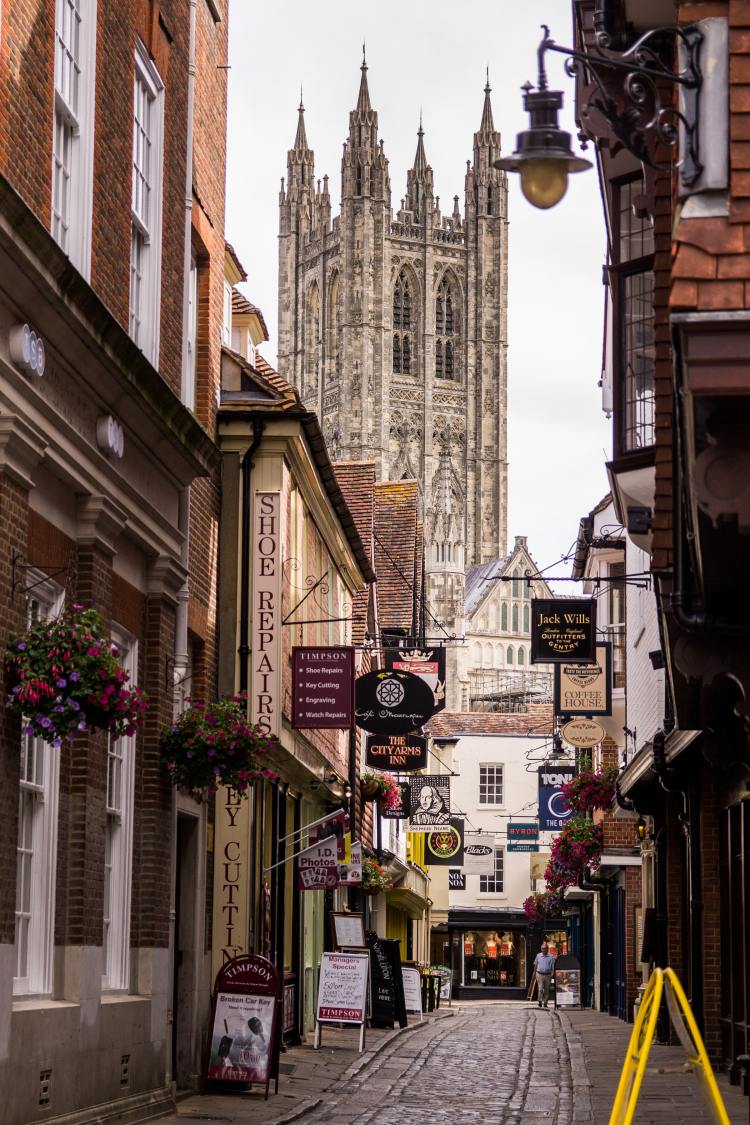
Travel to places with literary connections. As you vacation, search out places you can see along the way that appeal to your love of literature. Or even better: choose a lit-inspired destination. Here are some ideas for places to visit:
It couldn’t be simpler. Just choose any writer, find out their birthplace or residence, and pay the place a visit. It’s exciting to walk where great writers lived and worked!
Here’s a photo of me taken at the grave of Robert Frost, Bennington, Vt.In 2019, I visited the site in NYC of the 1911 Triangle Shirtwaist Factory fire.During July of 2021, my husband and I found ourselves driving near areas in South Dakota where Into the Wild was filmed.Emily Dickinson Museum, Amherst, Mass. | Photo: Wikimedia CommonsThe Outsiders House Museum, Tulsa, Okla. | Photo: Wikimedia CommonsWe visited the Laura Ingalls Home and Gravesites in DeSmet, S. Dakota in 2021.
Visiting a literary location will give you a closer connection and a greater appreciation for your favorite author. To walk in the footsteps of the literary greats is indeed a blessing and a surefire way to refresh your passion for ELA.
The bottom line: experiencing a literary destination could be one way you reignite your excitement for your ELA content.
And yes, I know the high cost of gasoline is a factor. Seek out the closest literary tour you can find. You might be surprised with what you find locally! Cultivate your passion this summer before it’s too late… visit a literary locale!
Marilyn Yung
Thanks for reading! Subscribe for free below (and receive a cool poetry handout!) to catch my upcoming post on Poetry Transcription and Poetry Out Loud, the coolest poetry contest ever.
With school starting soon, it’s important to remember why we teach. When we cultivate our passion, we’ll be better teachers.
I’ve had a handful of teachers contact me this week requesting help with classroom routines and specific literature units. Please feel free to contact me by leaving a comment on any post, or by leaving a message on my Contact Page. I’m more than happy to reply ASAP to offer help or just encouragement as you get into your planning for fall. Cheers!
Need a new poetry idea?
Enter your email below and I’ll send you this PDF file that will teach your students to write Treasured Object Poems, one of my favorite poem activities. I know your students will enjoy it!
Treasured Object Poems
Processing…
Success! You're on the list.
Whoops! There was an error and we couldn't process your subscription. Please reload the page and try again.
Other than my first year of teaching, the 2021-2022 school year was my most challenging. Out of eleven years of teaching both middle school and high school, students were more disengaged and more disinterested in literature, writing, and school in general, than ever before. It was tough.
There’s nothing worse than trying to get a discussion going when students won’t talk… not even to each other, let alone in a whole-class conversation.
This happened so many times last year, it was disheartening.
But guess what?
I still had to keep teaching.
To do that, I had to be excited about each and every day’s lesson. Fortunately, I love my content area. It’s amazingly cool to be able to work full-time sharing awesome literature with students and helping them express themselves through writing.
But when you’re in the trenches of mid-October or, worse yet, mid-January, I know how hard it can be to stay excited, positive, and optimistic in the classroom so your students can benefit from that joy.
So just for you, I’m posting a few tried-and-true ways that help me stay passionate and excited about my content. I’ve been sharing these ideas over this week as the beginning of school approaches. And yes, I think you’ll find some of them a little unusual (like this one!), but they work for me and keep me interested in learning more about my content.
So, without further ado, here’s my fourth way to reignite your passion for ELA:
Transcribe a movie!
A few years ago I transcribed an entire movie to learn more about screenwriting. It was an experience that has stayed with me ever since.
Sure, I could have looked up the script online somewhere, but actually transcribing the movie myself onto paper caused me to better notice each and every word.
The Fugitive starring Harrison Ford taught me a lot about screenwriting.
To transcribe the movie, I had to do quite a bit of “short hand” and I’m sure I missed a line here or there, but I wrote the entire script, and here’s what I learned: EVERY SINGLE LINE OR SPOKEN WORD IN THE MOVIE IS TOTALLY NECESSARY TO THE VIEWER. Screenwriters obviously know this, but transcribing the movie really brought this truth to light for me. Every line of the script serves a purpose. And I suppose the converse is true, too. If a line can be omitted from the script, then it’s unnecessary to the action.
Transcribing The Fugitive taught me a lot about being concise when writing. When I and my students write, we need to make sure that every word counts or performs a function. If it’s not working hard to fulfill a purpose, it probably needs to be removed.
Another benefit: transcribing The Fugitive word-for-word taught me a lot about storytelling for the screen, and it’s also made me more passionate and appreciative of screenwriting and the skill it takes to do it.
This is how my students look at me a lot. They can’t believe I do some of the nerdy things I do for literature. Photo by Sincerely Media on Unsplash
Sure, it might get crazy as you transcribe, pausing to catch every word, but just do your best. If you miss a few lines, that’s okay. As long as you notice how necessary every word is to the storyline, you’ll get the point of this admittedly unusual activity.
It’s also helpful to share with students what I learned about writing concision with my students after I transcribe a movie. Plus, when students learn that I actually transcribed an entire movie, they witness my enthusiasm for my content again (and stare at me in disbelief!). I short, they’re flabbergasted by my nerdiness.
The bottom line: transcribing an entire movie could be one way you reignite your excitement for your ELA content. Delving deep into a story — in this case, one for the screen — may awaken some latent screenwriting dreams or at least make more evident the connection between the texts we read in class and the texts we watch on the screen.
Cultivate your passion this weekend… transcribe a movie!
Marilyn Yung
Thanks for reading! Subscribe for free below (and receive a cool poetry handout!) for tomorrow’s final last way to reignite your passion for ELA. With school starting soon, it’s important to remember why we teach. When we cultivate our passion, we’ll be better teachers.
Also coming up on the blog: A New Bell-Ringer Activity: Poetry Transcription! Stay tuned for that.
I’ve had a handful of teachers contact me this week requesting help with classroom routines and specific literature units. Please feel free to contact me by leaving a comment on any post, or by leaving a message on my Contact Page. I’m more than happy to reply ASAP to offer help or just encouragement as you get into your planning for fall. Cheers!
Need a new poetry idea?
Enter your email below and I’ll send you this PDF file that will teach your students to write Treasured Object Poems, one of my favorite poem activities. I know your students will enjoy it!
Treasured Object Poems
Processing…
Success! You're on the list.
Whoops! There was an error and we couldn't process your subscription. Please reload the page and try again.
Other than my first year of teaching, the 2021-2022 school year was my most challenging. Out of eleven years of teaching both middle school and high school, students were more disengaged and more disinterested in literature, writing, and school in general, than ever before. It was tough.
There’s nothing worse than trying to get a discussion going when students won’t talk… not even to each other, let alone in a whole-class conversation.
This happened so many times last year, it was disheartening.
But guess what?
I still had to keep teaching.
To do that, I had to be excited about each and every day’s lesson. Fortunately, I love my content area. It’s amazingly cool to be able to work full-time sharing awesome literature with students and helping them express themselves through writing.
But when you’re in the trenches of mid-October or, worse yet, mid-January, I know how hard it can be to stay excited, positive, and optimistic in the classroom so your students can benefit from that joy.
So just for you, I’m posting a few tried-and-true ways that help me stay passionate and excited about my content. I’ll be sharing these ideas over the next week as the beginning of school approaches. And yes, I think you’ll find some of them a little unusual, but they work for me and keep me interested in learning more about my content.
So, without further ado, here’s my third way to reignite your passion for ELA:
Learn something new!
I recently took advantage of JSTOR’s pandemic-inspired deal of one hundred free articles to read online per month. I spent an afternoon digging around for articles on The Great Gatsby.
I was searching for articles about Fitzgerald’s use and treatment of Meyer Wolfsheim for this post, and also stumbled upon an article that revealed an idea TOTALLY NEW to me… that Gatsby’s last business dealings might have been as a conspirator in the real-life Teapot Dome Scandal.
This is the scandal that Tom Buchanan badgered Jay about in Chapter 7 at the Plaza Hotel suite. Y’know, to the point where Jay lost his control and, by the way, Daisy, too? Read this post here.
This revelation sparked new insights for me about my favorite novel. Sure, it’s all speculation, but the author presented a compelling argument that reinvigorated my curiosity and reminded me why I love The Great Gatsby (and my content, and therefore, my job) so much: there’s always something new to consider on every reading. Thanks, JSTOR!
Now I know this might sound like work to you… to be researching and reading even more than you already do. And yes, you’ve got a point, but that’s why it’s so important to research and read up on a topic, an author, a genre, or a novel that YOU personally can “nerd out” on.
Think of it as permission to indulge yourself in whatever literary love you naturally possess.
I guarantee that allowing yourself to “nerd out” and explore your original love of literature will reinvigorate yourself for the year ahead. Or, if it’s deep in the middle of the semester and you’re in need of some relief, give yourself permission to jump the tracks and investigate something you normally wouldn’t have time to investigate.
The new information you discover will restore your excitement, spark your curiosity, and reignite your love for your content.
And finally… share what you’ve learned with your students. Allow them to witness your excitement and see your love of learning in action. They’ll be inspired by your enthusiasm and as the old saying goes, “Enthusiasm is contagious!”
Enjoy the energetic vibes that your newfound knowledge lends to your teaching and classroom environment!
Thanks for reading! I believe it IS really helpful to let myself learn something new. As you know, it actually happens on its own quite naturally during the course of teaching, but every once in a while, I stumble upon a new idea — either on my own or when I jump down the JSTOR rabbit hole — and it’s so refreshing when I take the time to research, read, enjoy, and share my new knowledge.
Have you learned something new and personally exciting lately about a favorite author or book? Leave a comment in a reply below or leave a message on my Contact page.
Need a new poetry idea?
Enter your email below and I’ll send you this PDF file that will teach your students to write Treasured Object Poems, one of my favorite poem activities. I know your students will enjoy it!
Treasured Object Poems
Processing…
Success! You're on the list.
Whoops! There was an error and we couldn't process your subscription. Please reload the page and try again.
Other than my first year of teaching, the 2021-2022 school year was my most challenging. Out of eleven years of teaching both middle school and high school, students were more disengaged and more disinterested in literature, writing, and school in general, than ever before. It was tough.
There’s nothing worse than trying to get a discussion going when students won’t talk… not even to each other, let alone in a whole-class conversation.
This happened so many times last year, it was disheartening.
But guess what?
I still had to keep teaching.
To do that, I had to be excited about each and every day’s lesson. Fortunately, I love my content area. It’s amazingly cool to be able to work full-time sharing awesome literature with students and helping them express themselves through writing.
But when you’re in the trenches of mid-October or, worse yet, mid-January, I know how hard it can be to stay excited, positive, and optimistic in the classroom so your students can benefit from that joy.
So just for you, I’m posting a few tried-and-true ways that help me stay passionate and excited about my content. I’ll be sharing these ideas over the next week as the beginning of school approaches. And yes, I think you’ll find some of them a little unusual, but they work for me and keep me interested in learning more about my content.
So, without further ado, here’s my second way to reignite your passion for ELA:
Wear your reading passion.
Wear a t-shirt with your favorite novel (or childhood book on it). I have a Great Gatsby relaxed fit t-shirt (see the photo at the top of this post) that I purchased from Out of Print. I also made a t-shirt (see below) featuring a beautiful sentence from The Great Gatsby.
No doubt, when you “wear a book” students will notice your clothing and ask about it, thereby providing you with the perfect opportunity to wax enthusiastically!
I made this t-shirt last summer and designed it around one of the many beautiful sentences from The Great Gatsby.
Make a big deal out of why you love your novel or other book so much. Get a little too enthusiastic!
In fact, get a little weird about it!
Sharing your passion will be fun for you, and your students will observe your passion for reading in action. The moment will add a dash of energy to your day and give you a little boost as well. Fight burnout and invest in some literary wear this year!
Here are three literary wear sources to get you started:
Wearing a t-shirt that gets you talking and sharing your enthusiasm with a student is a great way to reignite your passion for ELA.
Do you ever wear a t-shirt with a literary design or book cover? (And I’m not talking about “teacher quotes” or funny grammar-themed tees, but shirts that let you talk about literature.) Leave a comment by replying below or send me a message via my Contact page.
Need a new poetry idea?
Enter your email below and I’ll send you this PDF file that will teach your students to write Treasured Object Poems, one of my favorite poem activities. I know your students will enjoy it!
Treasured Object Poems
Processing…
Success! You're on the list.
Whoops! There was an error and we couldn't process your subscription. Please reload the page and try again.
Other than my first year of teaching, the 2021-2022 school year was my most challenging. Out of eleven years of teaching both middle school and high school, students were more disengaged and more disinterested in literature, writing, and school in general, than ever before. It was tough.
There’s nothing worse than trying to get a discussion going when students won’t talk… not even to each other, let alone in a whole-class conversation.
This happened so many times last year, it was disheartening.
But guess what?
I still had to keep teaching.
To do that, I had to be excited about each and every day’s lesson. Fortunately, I love my content area. It’s amazingly cool to be able to work full-time sharing awesome literature with students and helping them express themselves through writing.
But when you’re in the trenches of mid-October or, worse yet, mid-January, I know how hard it can be to stay excited, positive and optimistic in the classroom so your students can benefit from that joy.
Fortunately, I’ve come up with a few tried-and-true ways that help me stay passionate and excited about my content. I’ll be sharing these ideas over the next month as the beginning of school approaches. And yes, I think you’ll find some of them a little unusual, but they work for me and keep me interested in learning more about my content. So, without further ado, here’s my first way to reignite your passion for ELA:
Memorize and recite poetry
During the 2020-2021 school year, I began using my forty hour commute to memorize some Shakespearean sonnets. I started with Sonnet 18 (Shall I compare thee to a summer’s day?) and over the following year added four more (130 My mistress’ eyes, 29 When in disgrace with fortune; 55 Not marble nor the golden monuments; 116 Let me not to the marriage of true minds). I now have these five committed to memory.
To study the poems, I printed out the sonnets on paper and glued them to an index card so I could have them in my purse whenever I had some time to work on memorizing them. I also kept a screenshot of them handy on my phone.
William Shakespeare Mural | Photo: Unsplash
I originally memorized the sonnets for my British Lit class and knowing a sonnet or two was helpful during our unit on the sonnets of Sir Philip Sidney, Sir Edmund Spenser, and of course, Will. The sonnets eventually came in handy during my last hour poetry class, especially as my students prepared for memorizing and performing poetry for Poetry Out Loud, the annual recitation contest sponsored by the National Foundation for the Arts and the Poetry Foundation.
Reading and reciting the poems has enriched my teaching and given me something authentic and exciting to share with students. Because I had memorized the sonnets so thoroughly, internalizing them even, I was better at several things, such as discerning subtle nuances of meaning, appreciating the role of rhyme, and noticing the function and resulting beauty of iambic pentameter.
As a result, I was able to pass along my more sensitive take on the poetry to my students. In short, because I understood the sonnets better, my teaching improved.
Reciting poetry is nothing new. In fact, some may think it’s old-fashioned, but think of it as a modern “verbal close reading exercise.”
Recitation is a type of performance-based learning (an interactive approach where students participate in a close reading of text through intellectual, physical and vocal engagement). This type of teaching creates a powerful, personal connection to poetry that works across all grade levels and capabilities from ELL to AP students.
I like the description in the above quote: “performance-based learning.” That’s so accurate. For me, memorization deepens my personal connection with a text. A more acute personal connection builds my content confidence and fuels my passion. In the end, students respond in a positive way to my passion and that, in turn, motivates me. That’s exciting!
Thanks for reading again this week!
Have you ever tried memorizing poetry either on your own or with your students? Recitation is a forgotten art and I believe it may have a place in classrooms today.
Leave a comment or your own idea for how you stay passionate about your content by leaving a reply below or via my Contact page.
Need a new poetry idea?
Enter your email below and I’ll send you this PDF file that will teach your students to write Treasured Object Poems, one of my favorite poem activities. I know your students will enjoy it!
Treasured Object Poems
Processing…
Success! You're on the list.
Whoops! There was an error and we couldn't process your subscription. Please reload the page and try again.
Great Gatsby Chapter 7 Activity: Teapot Dome Scandal
Bring history and ELA together for a cross-curricular Gatsby reunion! If you’re like me, it’s easy to fall into the rabbit hole known as JSTOR, the digital library that contains, according to its website, more than “12 million journal articles, books, images and primary sources.” It’s even easier to fall into the JSTOR rabbit hole when you’re also a huge fan of The Great Gatsby by F. Scott Fitzgerald.
Recently, I stumbled across an interesting article that shed some light (for me, anyway) on the critical, climactic moment when Jay Gatsby lost Daisy Buchanan forever.
It’s the precise moment when Tom Buchanan made one particular comment and — POOF! — Jay and Daisy were no more. In the book, it happens quickly albeit over the course of a few paragraphs of perfectly scripted dialogue. And if you’re like me, and struggle to catch every detail (there’s just so many!) folded into Fitzgerald’s prose, it’s easy to miss.
What was Tom’s comment that so unhinged Gatsby? Here it is:
“That drug-store business was just small change,” continued Tom slowly, “but you’ve got something on now that Walter’s afraid to tell me about.”
I like how Fitzgerald has Tom speak slowly here, as if Tom knowingly suspects his divulgence will be Gatsby’s undoing. Fitzgerald follows Tom’s rumor from his friend Walter Chase with a paragraph where Nick tells us that Daisy stares between Gatsby and Tom, Jordan keeps quiet, and finally, Gatsby looks as if he had just “killed a man.”
Nick continues to paint the scene, describing how Jay then “began to talk excitedly to Daisy, denying everything, defending his name against accusations that had not been made.”
Yikes. It’s painful to picture a panic-stricken Gatsby withering beneath the pressure to cover up and explain away Tom’s carefully spoken accusation to Daisy. But it doesn’t work.
Nick continues, “But with every word she (Daisy) was drawing further and further into herself, so he gave that up, and only the dead dream fought on as the afternoon slipped away, trying to touch what was no longer tangible, struggling unhappily undespairingly, toward that lost voice across the room.”
And with that, Jay lost Daisy
I’ve read The Great Gatsby numerous times, but never really noticed the potential significance of Tom’s slowly spoken words “something on now.” Of course, thanks to my JSTOR discovery, I have a new perspective on the argumentative gymnastics that took place in that “stifling” suite high up in the Plaza Hotel at four o’clock one afternoon in 1922.
What “something” was Tom referring to? Whatever it was, it must have been damning for Gatsby, and Tom knew it.
The “something” couldn’t have been Gatsby’s involvement with boot legging, since Tom acknowledged that that activity was “small change” made in “side-street drug-stores” in New York and Chicago. Clearly, mere bootlegging — Tom calls it a few lines later yet again “one of his little stunts” — wasn’t what did Jay in.
In addition, the “something” couldn’t have been Gatsby’s possible involvement in Meyer Wolfsheim’s 1919 World Series fix. After all, Tom also mentioned that crime, acknowledging how his friend Walter Chase was scared to talk about it due to threats from Wolfsheim.
So if the “something on now” isn’t bootlegging and isn’t gambling, what is it?
Well, that’s where my JSTOR discovery comes into play.
The “something on now” could be the Teapot Dome Scandal of the early 1920s.
According to History.com, “Before the Watergate Scandal, the Teapot Dome Scandal was regarded as the most sensational example of high-level corruption in the history of U.S. politics.”
For more basic info about Teapot Dome, watch this video:
According to the History.com article, “Albert Fall, a former Secretary of the Interior, was charged with accepting bribes from oil companies in exchange for exclusive rights to drill for oil on federal land. The sites included land near a teapot-shaped outcrop in Wyoming known as Teapot Dome, and two other government-owned sites in California named Elk Hills and Buena Vista Hills.”
It involved, History.com explains, “oil tycoons, poker-playing politicians, illegal liquor sales, a murder-suicide, a womanizing president and a bagful of bribery cash delivered on the sly.”
In fact, Randall notes that the first “crucial transactions” of the Teapot Dome Scandal occurred in 1922, the year The Great Gatsby is set. The scandal, which Randall describes as “the biggest financial scandal of the 1920s,” hit the newsstands in 1924, the year before the novel was published.
As a result, Randall contends that Fitzgerald knew the scandal would be in the minds of readers as they read his novel and that they would naturally make a connection between Jay Gatsby and Teapot Dome.
While Randall does contend that his Teapot Dome idea is purely speculative, he writes that it:
fits the facts of Fitzgerald’s story
explains Gatsby’s sudden and mysterious rise to great wealth
“exemplifies the whole theme of the corruption of man’s aspiration in America.”
Political Cartoon on The Teapot Dome Scandal of the 1920s
I would venture that Teapot Dome might have been similar in scope to the Enron scandal of 2001. Everyone and their dog knew about that bankruptcy, which was, at the time, the largest in U.S. history. Another contemporary connection might be this year’s Theranos/Elizabeth Holmes case that, by the way, offers direct ties to The Great Gatsby as discussed in this post.
Randall argues that the “something on now” is Teapot Dome with more evidence:
In letters from Max Perkins, Fitzgerald’s editor, he asks the author to insert some brief hints (“little touches of various kinds”) about where Gatsby’s immense wealth comes from. In his revisions, Fitzgerald provides these hints with two allusions to “oil” in Chapters 1 and 5.
With some quick figuring, Randall also computes that fixing the 1919 World Series would not have afforded Gatsby his extreme wealth. The real-life gambler Arnold Rothstein (upon whom Fitzgerald based Wolfsheim) netted $350,000 from the 1919 fix, an amount that Randall writes would be insufficient to account for Gatsby’s “tremendous affluence.”
Also, when Gatsby tells Daisy that it took him three years to earn the money to buy his mansion, Randall disputes the timing by arguing that not enough time would have passed from his return from the war in 1919 to 1922. But Teapot Dome? It fits the timeline, Randall speculates.
And it would also explain Gatsby’s wilting, desperate demeanor at The Plaza after Tom makes his slowly uttered climactic comment. Now in Baz Luhrman’s 2013 movie, it’s presented quite differently — and inaccurately, to be sure. An uncharacteristically enraged and humiliated Gatsby, played by Leonardo diCaprio, attacks Tom as Daisy, Nick, and Jordan look on in astonishment. Still, the end result is the same: Daisy sides with Tom, and Gatsby’s dream dies.
But does the Teapot Dome scenario really matter?
Maybe and maybe not. But it’s an intriguing idea to discuss with students, too, which I contend is one of the most satisfying aspects of teaching The Great Gatsby. There are always more and deeper layers to Fitzgerald’s masterpiece, and when I can supplement a text with additional insights, and draw connections across the curriculum to American history and current events, I go for it.
Thanks for reading! I hope I’ve added to your store of possible talking points with your students the next time you teach The Great Gatsby. I’m amazed at how The Great Gatsby is the book that just keeps giving and giving.
Once I feel I have it figured out, I come across an article like Randall’s that opens up new possibilities, new conversations, and new revelations. Have you ever discussed Teapot Dome during your Gatsby units? Leave a comment in the replies below or use my Contact page to tell me your experiences.
Also, feel free to check out my growing number of Gatsby posts by clicking The Great Gatsby in the pull-down Blog Menu at the top of this page or by clicking the green box below.
Need a new poetry idea?
Enter your email below and I’ll send you this PDF file that will teach your students to write Treasured Object Poems, one of my favorite poem activities. I know your students will enjoy it!
Treasured Object Poems
Processing…
Success! You're on the list.
Whoops! There was an error and we couldn't process your subscription. Please reload the page and try again.
The Great Gatsbyby F. Scott Fitzgerald is such a multilayered and evergreen text! I’ve read it myriad times, and — I’m sure you can relate — I discover a new idea or noticing every time I revisit it. It’s no wonder that this book is such a popular read for American Literature classrooms.
And yes, I can foresee the day when this novel may be challenged for its lack of diversity, its chauvinism, and its other problematic themes. I have a feeling, however, that this novel will fare well in those discussions. After all, literature is a record of history and Fitzgerald captured the mood and morés of 1920s America faithfully.
Gatsby knew the experience of World War One soldiers who lived their lives in the trenches.
There’s so much Gatsby-ness in Gatsby! With that observation, I guess I’m really acknowledging JUST HOW MUCH is in this book. Sure, there are the plot and storyline, there are the literary allusions, there’s the vocabulary, and of course, since it’s Fitzgerald, there are those absolutely beautiful sentences.
Beyond comprehension questions and locating textual evidence, how do we help students keep up with everything? That was my quandary last fall when I started my Gatsby unit in December. (Yes, December. More on that seemingly weird timing in a later post. It worked out well, btw.)
So I made a “reader’s guide, so to speak, and it worked well to help students grasp all the goodness out of The Great Gatsby. My version from last fall looked like this:
Anyway, I’ve just re-designed this resource and I hope you like the changes I’ve made to give students a more comprehensive experience of The Great Gatsby.
Scroll through the slideshow below to see the cover page, the Jazz Age Journal pages for chapters 1-6, and one page of the key.Obviously, there are pages for chapter 7-9, plus another page of the key and a teacher direction sheet.
During reading and after reading
I designed this resource to help students have a better reading experience DURING the book and AFTER as well. The info they record as they read will help them understand the book in the moment, and will also come in handy for your end-of-unit project. Whether you assign hexagonal thinking maps, beautiful sentence projects, TQE discussion assessments, or traditional literary analyses, these pages will help students remember the details of the book for the necessary later projects you assign.
Chapter 7 takes place at The Plaza Hotel in New York City.
As for grading…
I mainly checked my students’ pages for completion and effort. Here’s how I “graded” these: I made each journal page worth sixteen points. Here’s how that broke down:
comprehension questions: 4 pts
main events of chapter: 3 pts
TQE (students wrote down one, i.e. either a T, a Q, or an E): 3 pts
vocabulary word: 2 pts
beautiful sentence: 2 pts
important quote: 2 pts
Overall, my Jazz Age Journal was a good accountability tool that helped students progress through the book efficiently.
Here’s how it works
The Jazz Age Journal includes one page for each chapter. There are boxed areas on each page for students to fill out as they read or listen to the text.
These boxed areas have students record:
the main events of the chapter (to help kids remember what happens to whom and when)
a new vocabulary word (If my kids wrote small, they were able to write a brief definition as well.)
a thought, question, or an epiphany (I asked students to just record one of these per journal page. Also, these were handy for getting whole class or group discussions going!)
a beautiful sentence (After all, it IS Fitzgerald!)
an important or especially significant quote and its page number (so students can easily locate it if needed for a later culminating activity)
Each page also contains the following:
five comprehension questions. I asked my students to write their answers on the back of the sheet.
three to four illustrations or photos that connect to the chapter. I have intentionally left these without captions so students ponder the connection. Some of them are really obvious (the man with “owl eyes”), but there are some that aren’t (Queensboro Bridge from chapter 4 or Radcliffe Camera from Oxford University, etc). I hope these images spur questions from your students for further research and/or discussion.
Final notes about how I used this
After grading and returning the pages to students, I asked them to keep them until we were finished with the book, so they could utilize them to better recall various parts of the novel as they worked on their culminating projects, which this year were hexagonal thinking maps. Read about my first go at hexagonal thinking and The Great Gatsby here.
I’ve never seen such beautiful shirts before!
Eventually, I may try beautiful sentence projects and if that’s the case, these journal pages will be ready to go with one beautiful sentence recorded from each chapter.
I really hope you enjoy this resource!
Please let me know how it goes! If you have any questions, please feel free to contact me by leaving a reply below or on my Contact page or emailing me at elabraveandtrue@gmail.com.
In addition, check out my gradually growing shop on this website. There are just a handful of resources on it right now, but check back for more soon.
You will also notice that my site is easier to navigate than in the past. For example, if you click on the blog menu at the top of this page, you will see posts arranged by category. For more Gatsby posts and ideas, drop down to find a page that features all my Gatsby-related posts or click on the The Great Gatsby box below. Have a great July!
Need a new poetry idea?
Enter your email below and I’ll send you this PDF file that will teach your students to write Treasured Object Poems, one of my favorite poem activities. I know your students will enjoy it!
Treasured Object Poems
Processing…
Success! You're on the list.
Whoops! There was an error and we couldn't process your subscription. Please reload the page and try again.
Even though I’ve taught The Great Gatsbyonly twice, I have done quite a lot of writing about Fitzgerald’s many-layered masterpiece. If you pull down to The Great Gatsby on my Blog menu at the top of this page, you’ll find upwards of fourteen posts related to what is considered by many to be the “Great American Novel.”
However, you won’t find a post there — until today, that is — about Meyer Wolfsheim, Gatsby’s sinister gangster-friend who was rumored to have “fixed the 1919 World Series” and made Jay into a businessman simply because Wolfsheim knew he “could use him good.”
Amitabh Bachchan plays Meyer Wolfsheim in Baz Luhrman’s 2013 The Great Gatsby.
Although Wolfsheim only appears twice in the novel, the gangster is an important key to Gatsby’s identity. We meet Wolfsheim in Chapter 4 when Nick and Gatsby visit a “well-fanned Forty-second Street cellar.” (In Baz Luhrman’s 2013 film, the establishment is a barbershop with a hidden door that leads to a speak-easy.)
A painfully stereotypical portrayal
Over the following four pages in Chapter 4, Fitzgerald paints a portrait of Wolfsheim with brushstrokes that highlight a very common Jewish stereotype. He alludes to Wolfsheim’s nose and/or nostrils no fewer than six times in Chapter 4 and once in Chapter 9, the book’s final chapter.
Fitzgerald’s preoccupation with Wolfsheim’s nose always startles and embarrasses me as I read the text and discuss it with students. Sure, we can wrap our minds around other elements that illuminate Wolfsheim’s gangster character: the human molar cuff buttons; the thick accent revealed in “Oggsford” (Oxford) and “gonnegtion” (connection); the word “wolf” in his carnivorous name. However, Fitzgerald’s preoccupation with Wolfsheim’s nose seems out of line.
Maybe this bothers me more than it does my students simply because they don’t recognize the stereotype. Even though they have no doubt studied anti-Semitism in their history classes and know that it gained popularity in the years before and during the World Wars, students may not understand how certain physical attributes were most often caricaturized.
And that’s why I find it difficult to acknowledge, let alone explain, Fitzgerald’s focus on Wolfsheim’s nose. I feel that by acknowledging the “Jewish nose” stereotype that I may be — in some imprecise way — giving it credence. And that is exactly what I don’t want to do.
Am I perpetuating the stereotype by revealing it?
So, my students and I stop during or after our reading of the Wolfsheim scenes and talk about them. I stumble through a quick explanation of the anti-Jewish propaganda that was prevalent in the early 1900s, and how the messaging usually included large hook-shaped noses, small eyes (yes, Fitzgerald worked that one in, too), dark hair, and others.
We question why Fitzgerald would have written in this manner. And because we’re in school and bells ring every fifty minutes, we usually arrive at some sort of resolution where we agree that the book’s story is one hundred years old. Sensibilities have changed. And sure enough, the bell rings, and that’s that.
As a teacher, this rush to move on means I don’t have the luxury of delving deeper during the school year to root out a text’s complications… for students or for myself.
And I feel guilty about that.
I feel guilty that I don’t have as much knowledge about Fitzgerald, Wolfsheim, and the 1920s as I should to provide a path for my students through this particular aspect of the novel.
But then summer comes, and I suddenly do have that luxury to ponder questions such as:
What do teachers do when an author’s direct characterization reeks of stereotype and racism?
What was Fitzgerald’s point?
What was he saying about 1920s America?
For that matter, what was he not saying about 1920s America?
Was Wolfsheim’s description merely evidence of Fitzgerald’s personal prejudices?
So, because it’s summer, and because I enjoy thinking about The Great Gatsby no matter the season, I’ve decided to share three articles to shed some light on the mysterious Meyer Wolfsheim and his function in the novel.
I’ve provided a few notes about each article below, including:
The author’s argument or thesis
The main take-aways
What this article may add to your class’ analysis of Wolfsheim
I don’t offer opinion on the views of the various authors I’ve provided. I’m merely including them here as resources if you, like me, need more information about Meyer Wolfsheim and Fitzgerald’s portrayal of this complex character.
So, if you’re familiar with the “Wolfsheim struggle bus” and the questions my students and I have had about the gangster’s portrayal, then these articles may find a place in your Gatsby lessons.
Check out these three articles:
1. “Fitzgerald and the Jews” by Arthur Krystal
Screenshot of “Fitzgerald and the Jews” by Arthur Krystal, published in The New Yorker.
This article first appeared in The New Yorker magazine on July 20, 2015. You can read it here.
Krystal’s Argument: This is a mouthful, but bear with me. I’ve boldfaced what I think is the key part of this statement. “The caricatures of Jews propagated by the Dreyfus Affair around the turn of the century and by the German press in the nineteen-thirties were driven by pure hatred; Fitzgerald was simply reiterating a familiar physiognomic code. He was provincial but not malicious, and made similar attributions about various nationalities, including the Irish.”
Main take-aways from this article:
Many people assume Fitzgerald was anti-Semitic based on his characterization of Wolfsheim. Krystal affirms that suspicion based in part on a 1921 personal letter that contains damning language. But Krystal also notes that, in his later years at least, Fitzgerald surrounded himself with a Jewish romantic partner (Sheila Graham), a Jewish secretary (Francis Kroll Ring), and various Jewish business associates (he worked in Hollywood in his later years). Even Monroe Stahr, the main character of his final novel, the unfinished The Last Tycoon, is Jewish. Krystal writes, “Although Stahr’s Jewishness is occasionally alluded to, it’s never disparaged.”
Other details in the article paint a balanced discussion of why Fitzgerald would have written such a controversial portrait of a Jewish gangster in The Great Gatsby. Krystal writes, “According to Kroll, he (Fitzgerald) was stung by accusations of anti-Semitism, and maintained that Wolfsheim ‘fulfilled a function in the story and had nothing to do with race or religion.'” Krystal explains that many notorious gangsters of the time were Jewish, including gambler Arnold Rothstein, on whom Wolfsheim is based. “It was perfectly reasonable to make a mobster Jewish,” Krystal adds.
What this article may add to your class’ analysis of Wolfsheim:
The article does contain racist statements attributed to Fitzgerald, so beware of that for your class.
Use this piece to understand why Fitzgerald may have chosen a Jewish character as a gangster and Gatsby’s business partner.
Also use it to discuss how Fitzgerald was a product of the Jazz Age. What events mentioned in the article might have influenced Fitzgerald’s portrayal of Wolfsheim?
2. “Ethnicity in The Great Gatsby” by Peter Gregg Slater
Twentieth Century Literature published this piece in 1973 by Peter Gregg Slater, a historian of American intellectual and cultural history.
Access this article on JSTOR, where you can read online without a paid subscription. Here’s a link to the article on JSTOR.
Slater’s Argument: “The purpose of this essay is to demonstrate that in Fitzgerald’s masterpiece of the 1920’s, The Great Gatsby, a heightened awareness of ethnic differences does constitute a significant element in the book.” The author adds that by reading the book through a “consciousness of ethnicity” lens, readers will better relate the novel to the 1920s.
Main take-aways from this article:
The author acknowledges that Fitzgerald is thought of as a reporter with his “literary accounts of the American 1920s.”
While the article discusses the racism of Tom Buchanan and illuminates how Fitzgerald chose to have other characters in the novel respond to Tom, Slater argues that “the image of Wolfsheim is the most complex development of ethnicity in The Great Gatsby.” We must also remember that the reader’s perception of Wolfsheim is conveyed through the eyes of by Nick Carraway.
Gatsby’s identity is inextricably tied to Wolfsheim’s. Moreover, could we consider Wolfsheim as the third father figure to Gatsby, after Henry Gatz and Dan Cody? After all, when Nick asks in Chapter 9 if Wolfsheim started him in business, Wolfsheim responds, “Start him! I made him… I raised him up out of nothing.”
What this article may add to your class’ analysis of Wolfsheim:
Fitzgerald paints Wolfsheim to be both “exotic” and “sinister.” Those are compelling words that would make a great vocabulary addition.
Discuss whether Wolfsheim might represent some aspect of America’s growing consciousness of ethnicity. Does the inclusion of Wolfsheim mirror the struggles of a nation coming to grips with its melting pot persona?
Compare Dan Cody to Meyer Wolfsheim. Slater writes, “Both Cody and Wolfsheim were instrumental in Gatsby’s ascent, but there the resemblance ends.” For example, Gatsby loses his fortune from Cody but swindles it all back with Wolfsheim. Also, he describes Cody as “hyper-American” and Wolfsheim as “exotic.”
3. “How the Great Gatsby Could Afford Those Great Parties” by Ezra Klein
Screenshot of “How the Great Gatsby could afford those great parties,” written by Ezra Klein in The Washington Post.
Klein’s Argument: Meyer Wolfsheim needed Jay Gatsby. In his article, Roose quite methodically analyzes Gatsby’s income and expenses to determine if the financial side of Gatsby’s bootlegging business adds up. Roose writes, “Far from being rich beyond all measure, he (Gatsby) may have been putting himself at risk by outspending his means.” In “How the Great Gatsby Could Afford Those Great Parties,” Klein writes, “But Roose’s analysis leaves something — or, more to the point, someone — out: Meyer Wolfsheim, the gangster bankrolling Gatsby.”
Main take-aways from this article:
Wolfsheim uses Gatsby for his networking potential into the White-Anglo-Saxon-Protestant (WASP) world. “The blond, apparently well-bred Gatsby could go where Meyer couldn’t, slapping backs and throwing parties and calling people ‘old sport,'” writes Klein.
Gatsby is simply the conduit that allows Wolfsheim to develop his bond scam, which is the crucial piece of gossip Tom uses to break Gatsby at the Plaza Hotel confrontation. Klein even speculates that all the parties and the glamorous mansion were as much about attracting business for Wolfsheim as they were about attracting Daisy to Gatsby.
What this article may add to your class’ analysis of Wolfsheim:
Discuss whether Gatsby, his mansion, and his parties were “business expenses” for Wolfsheim.
Discuss how Gatsby’s and Wolfsheim’s ethnic differences enhance their relationship.
As you can see, there is SO MUCH to know and ponder about Meyer Wolfsheim. Despite appearing in the novel only twice, Wolfsheim’s influence seems increasingly important. Heck, I’ve read The Great Gatsby numerous times now and Fitzgerald’s OG is just now starting to become clarified in my mind.
It’s my hope that this post will help you dig deeper into The Great Gatsby, especially as it relates to Meyer Wolfsheim who — due to Fitzgerald’s admittedly stereotypical portrayal — has always given me pause.
How do you handle Wolfsheim? Reply with a comment below or message me using my Contact page. I would love to hear from you.
Side note, but an important one: I will be leaving the public high school classroom next year, and will be teaching literature and writing as an adjunct instructor at a private local (yay! no more one-hour commute!) university. I plan to continue posting about the teaching of literature and writing. I love teaching and love making it memorable!
Need a new poetry idea?
Enter your email below and I’ll send you this PDF file that will teach your students to write Treasured Object Poems, one of my favorite poem activities. I know your students will enjoy it!
Treasured Object Poems
Processing…
Success! You're on the list.
Whoops! There was an error and we couldn't process your subscription. Please reload the page and try again.
Works Cited Slater, Peter Gregg. “Ethnicity in The Great Gatsby.” Twentieth Century Literature, vol. 19, no. 1, 1973, pp. 53–62. JSTOR, https://doi.org/10.2307/440797. Accessed 17 Jun. 2022.
3 Resources to Build Prior Knowledge and Background
Last week, I published a post about the 1998 movie Shakespeare in Love, one of my very favorite movies. That post recognized the fact that while the movie is indeed R-rated, it’s still one you can watch IF you know the parts to skip. In that post, I provided a free PDF of the five extremely brief scenes you should avoid in your classes. The PDF includes timestamps and dialogue being spoken so you’ll know exactly when to stop the movie.
And yes, I wish I didn’t have to skip over so many parts of this movie. After all, it’s a good resource for British Literature curricula, which as many teachers know, lack quality films (like The Dig on Netflix) to complement difficult texts.
Your students will learn about the theaters of Elizabethan Age, such as Shakespeare’s Globe Theater. Shakespeare in Love focuses on the rivalry between two London theaters, The Curtain and The Rose.
Plus, students enjoy Shakespeare in Love. My poetry class was captivated just a month or so ago at the end of school and watched it intently.
While the film contains so much good information about Elizabethan society, the beginnings of modern theater, and Shakespeare and his colleagues, it’s a film that you may wish to load on the front-end with some other resources to prep students for the movie so they’ll get more out of it. Students may fail to discern the significance of certain scenes without the details they’ll learn from the three resources below.
3 Resources for Shakespeare in Love
1. Shakespeare In Love and On Film
Absent of spoilers, this twenty-minute film will be the perfect way to build excitement for the movie. Play it a week ahead to get kids ready to watch the full film.
All the major players of the movie — from director John Madden, to co-screenwriters Tom Stoppard and Marc Norman, to costume designer Sandy Powell, to actor Ben Affleck — are featured documentary-style discussing various aspects of the movie: its production (115 crew members built two full-size theaters to make the movie!), its reception (the 1998 Oscars were awash in the glow of the all-star cast and crew), and its appeal down through the ages. As director John Madden says in the video, “Shakespeare in Love has one foot in the sixteenth century and one foot in the twentieth.”
The video also includes appearances by Glenn Whipp, LA Daily News film critic, and Richard Horwich, Ph.D., adjunct faculty at New York University, commenting on the movie’s staying power and Shakespeare’s works’ adaptability.
This video provides a behind-the-scenes look at Shakespeare in Love.
2. Film Education Study Guide
A day or two before you watch the movie, use this Film Education Study Guide from Film Education, an organization based in London that promotes using films in curriculum. To use this resource, I did the following:
made photocopies of each section (London Theater, Shakespeare’s London, Playhouses and Elizabethan Theatre, and Love & Marriage in the Sixteenth Century are three),
had students work with partners to summarize and note the major points of their section
invited students to add their findings (plus details from the bonus feature discussed next) to a shared Google Slides presentation
watched students present their findings to the class the day before we started watching the movie
This is a really good free resource with tons of solid information on Elizabethan society and the beginnings of modern theater.
This is the cover page for the Film Education Study Guide. It’s a sixteen-page document ready-to-copy for your classes.
3. Shakespeare in Love Bonus Feature
Use this bonus feature alongside the Film Education Study Guide above. I asked students to find two to three additional ideas or points from this video and add their information to their shared Google Slide.
This 45-minute bonus feature is very educational and well-done. I speculate that this feature is included with the DVD just so the film would find its way into classrooms. It’s very well-done and thorough. All the major actors of the movie narrate and discuss the award-winning details of the film that can be inadvertently overlooked by Shakespeare novices.
Honestly, however, note that this video does get a little long. I’ve shown only about twenty minutes of it to students and then we moved on to the movie. Those twenty minutes, though, are PACKED with information (i.e. students still found new details to add to their Google Slides) that helped students notice specific highlights of the movie such as the elaborate and award-winning costumes used to recreate Elizabethan period drama. For example, colorful clothing for aristocratic characters in plays was procured or borrowed from the wealthy since only they could afford specially dyed fabrics and trims. The feature also explains the finer points of seating in the round theaters. (The standing-room-only seats on the center floor were the cheapest, the balconies were the most expensive.)
In addition, leading lady Gwyneth Paltrow and her co-stars even note how very little is known about Shakespeare and then they discuss the real lives of some of the historical characters and events of the period to paint a clearer picture of the legendary playwright.
Really, there is SO MUCH MORE that this video teaches and my explanation here doesn’t do it justice. Watch all 45 minutes yourself and then choose which portions will be most useful to your class.
There you have it. Three solid resources to consider prior to watching Shakespeare in Love with your students. This movie is one not to miss. Sure, avoid those inappropriate scenes (see my previous post), but after that use this movie to help your students learn more about Elizabethan society, the beginnings of modern theater, and of course, William Shakespeare.
Enter your email below and I’ll send you this PDF file that will teach your students to write Treasured Object Poems, one of my favorite poem activities. I know your students will enjoy it!
Treasured Object Poems
Processing…
Success! You're on the list.
Whoops! There was an error and we couldn't process your subscription. Please reload the page and try again.
Despite its R rating, you can still teach with this film. Here’s how.
If you need a good movie for your British Literature classes, but have always shied away from Shakespeare in Love due to its sexual content, shy away no longer. At the bottom of this post I’ve outlined the exact scenes to skip (timestamps and dialogue included). If you’re already a fan of the movie and just want the timestamps, scroll to the bottom of this post. If you need to learn more about the movie, read on.
I love so many things about using Shakespeare in Love for juniors and seniors in high school. Directed by John Madden and released in 1998, the movie won seven Oscars, including Best Picture, Best Actress in a Leading Role, Best Actress in a Supporting Role, Best Writing, Best Art & Set Decoration, Best Costume Design and Best Music.
A star-studded cast
Joseph Fiennes as Will Shakespeare | Photo: Greg2600, CC BY-SA 2.0Gwyneth Paltrow as Viola De Lesseps | Photo: Georges Biard, CC BY-SA 3.0Colin Firth as Lord Wessex | Photo: nicolas genin from Paris, France, CC BY-SA 2.0Judi Dench as Queen Elizabeth | Photo: Caroline Bonarde Ucci, CC BY 3.0Geoffrey Rush as The Rose Theater Owner Philip Henslowe | Photo: Eva Rinaldi, CC BY-SA 2.0Ben Affleck as Ned Alleyn | Photo: Gage Skidmore, CC BY-SA 2.0
Starring Joseph Fiennes and Gwyneth Paltrow, the movie is two hours and there minutes long and is classified as both a comedy and a drama. It tells the story of Will Shakespeare (Joseph Fiennes), a struggling, up-and-coming playwright suffering from writer’s block. His lover, Rosaline, serves as his muse. However, Rosaline is unfaithful with Tilney, the Master of the Revels, who has the power to censor the local playhouses (and is based on a historical figure explained here). As a result, Will sinks into despair and burns his barely begun script of his newest comedy, the ridiculously titled Romeo and Ethel, the Pirate’s Daughter.
It’s a shame to miss a movie this good due to a few scenes that you can easily skip over.
But then Will meets Viola De Lesseps (Gwyneth Paltrow), a young woman in love with theatre and poetry — especially Shakespeare’s. However, because women could not perform in the theater, she disguises herself as a young man named Thomas Kent so she can audition for Shakespeare’s new comedy. She aces the audition and earns the role of Romeo. Shakespeare eventually discovers Thomas Kent is actually Viola De Lesseps, falls in love, and determines that she is his new muse. He can now write with abandon and the show goes on.
Further help from Shakespeare’s colleague Christopher Marlowe (Rupert Everett), the actor Ned Alleyn (Ben Affleck), and Queen Elizabeth (Judi Dench) further propel the production of Romeo and Ethel, which at Marlowe’s suggestion is renamed Romeo and Juliet.
A replica of a typical theater of the Elizabethan Age, similar to that used in Shakespeare in Love. | Image by David Mark from Pixabay
The movie’s narrative continues amidst an arranged marriage between Viola and Lord Wessex (Colin Firth), which obviously causes tension between Will and Viola, and eventually determines the movie’s denouement where Viola’s future life inspires the plot of Shakespeare’s tragicomedy The Tempest.
Despite being grounded in historical figures, the movie takes many liberties. The movie’s mix of historical figures and creative license shows how fiction and fact can intermingle to great effect in cinema. As Sarene Leeds writes on Mental Floss, “Shakespeare in Love will likely never win any accolades for its historical accuracy, but that doesn’t stop it from being one of the most romantic movies of all time.”
But it’s so much more than a love story.
Besides offering literary value and fun, the movie does have some historical value as well, especially when you provide plenty of prior knowledge and background (read my next post for some resources). By watching Shakespeare in Love, your students will learn…
what a production at the round house theaters looked and sounded like
Elizabethan theater tricks (for example, red silk mimicked spurting blood)
the behind-the-scenes business of the Elizabethan theater industry
social expectations for men and women during the Elizabethan era
that Shakespeare may have been, like many writers, insecure about his abilities
the collaboration possibilities between Marlowe and Shakespeare
Literary allusions galore
Students will also enjoy catching some allusions to other Shakespearean plays, such as Macbeth, Hamlet, Henry the Fourth Part 1, Romeo and Juliet, The Taming of the Shrew, and doubtless others that I didn’t notice. For example, your students will notice a line from R & J when a priest condemns the competing theatres The Curtain and The Rose by roaring into a crowd of theatre-goers, “A plague on both your houses!”
Still, despite all the positive aspects of Shakespeare in Love, there are still those problematic parts that are simply not appropriate for high school. In fact, here’s what Common Sense Media has to say about Shakespeare in Love:
Parents need to know that this movie has numerous racy moments, including graphic sexual scenes and partial female nudity. Much of the dialogue carries a crass sexual undertone. However, the violence, consisting mostly of sword and dagger battles, is relatively benign for a teenage audience.
With all this being said, I’ve provided a very detailed breakdown of the five raciest and most crass moments of Shakespeare in Love so you can easily skip over them. Just freeze the image on your screen, move to the next appropriate timestamp and continue.
Note:Yes, it is a little disruptive to stop and start the film at five points. So, if five interruptions seems too much for you, consider eliminating one interruption by stopping at 47:37 and skipping straight to 49:34. (I did try that once, and while students missed a little, I felt the benefit of one less interruption outweighed what was missed.) But, it’s your call.
What Not to Watch: Shakespeare in Love
Stop at 17:44 (Will shouts “Burbage!”); then skip to 17:58.
Stop at 47:37 (Will extends arm for Viola); then skip to 47:46.
Stop at 48:53 (Will says “I must…”); then skip to 49:34.
Stop at 54:00 (Viola disguised as Thomas Kent says, “Tear the word…”); then skip to 55:29.
Stop at 1:04:35 (Marlowe shouts “Burbage!”); then skip to 1:05:37.
If you’d like a PDF of “what not to watch,” download it by clicking below.
Yes, I wish I didn’t have to skip over so many parts of this movie. It’s a good resource for British Literature curricula, which as many teachers know, lack quality films (like The Dig on Netflix) to complement difficult texts.
Plus, students enjoy this Shakespeare in Love. My poetry class was captivated and watched it intently. In the past, I had always hesitated to view it, but decided to finally go for it by making a few adjustments and skipping over the objectionable parts.
Tell me how it goes should you decide to watch this movie with your students. Leave a comment below or on my Contact Page.
My next post will feature some additional resources to consider prior to watching Shakespeare in Love. This movie contains lots of historical information about Elizabethan theater and society, and the resources I’ll discuss will help your students get the most out of the movie. Find out about that upcoming post by becoming a follower or by adding your email to the Treasured Object Poetry sign-up below.
I’ve also included some links further below to some of my most popular British Literature posts. I hope you’ll check those out as well. Thanks for reading!
Need a new poetry idea?
Enter your email below and I’ll send you this PDF file that will teach your students to write Treasured Object Poems, one of my favorite poem activities. I know your students will enjoy it!
Treasured Object Poems
Processing…
Success! You're on the list.
Whoops! There was an error and we couldn't process your subscription. Please reload the page and try again.